2026 Coffee Market in South Korea: Inside the Private Equity Takeover
Updated: April 22, 2026
2026 Coffee Market in South Korea:
South Korea is famously known as a “coffee republic,” where cafes seem to occupy every available street corner. In recent years, the most explosive trend dominating this vibrant landscape has been the unstoppable rise of ultra-affordable, low-cost coffee chains. However, beneath the surface of this booming industry lies a complex financial ecosystem driven by major institutional players.
If you are an investor or F&B professional looking at the Korean market, here is what you really need to know about the hidden mechanics of the budget coffee boom.
The Invisible Baristas: Private Equity’s Big Play in 2026 Coffee Market in South Korea
If you look closely at the biggest names in the Korean budget coffee scene, you will find a common denominator: they have all been acquired or backed by Private Equity (PE) funds and strategic investors.
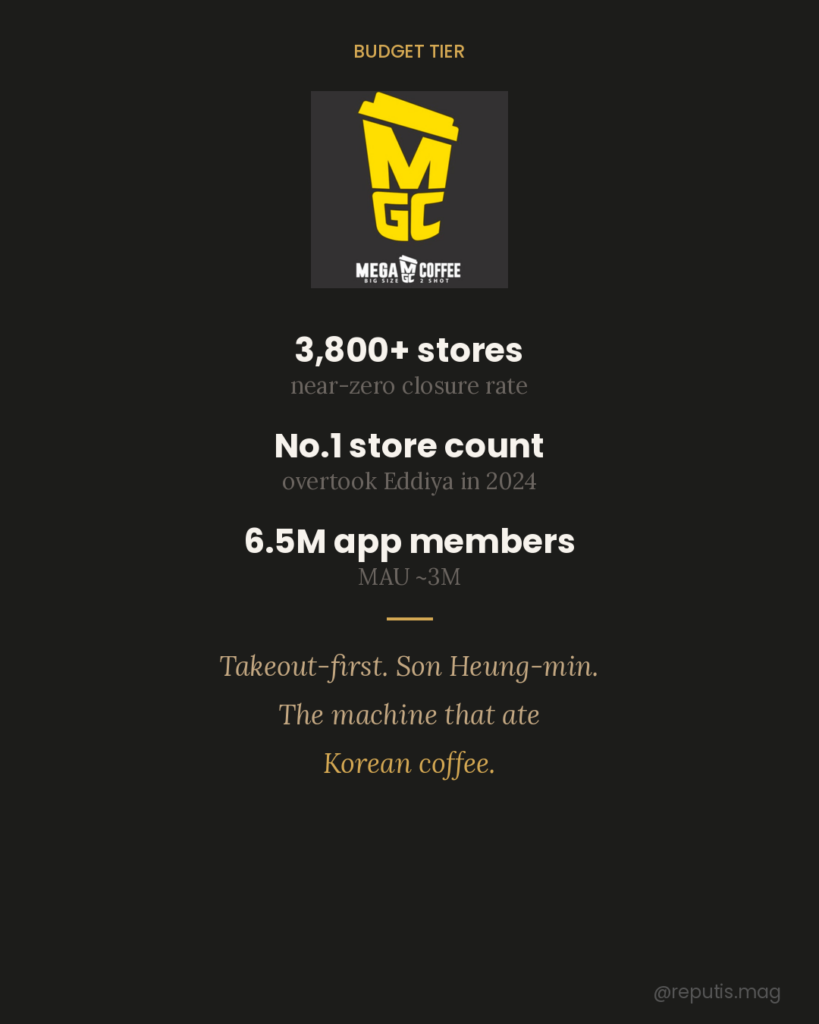
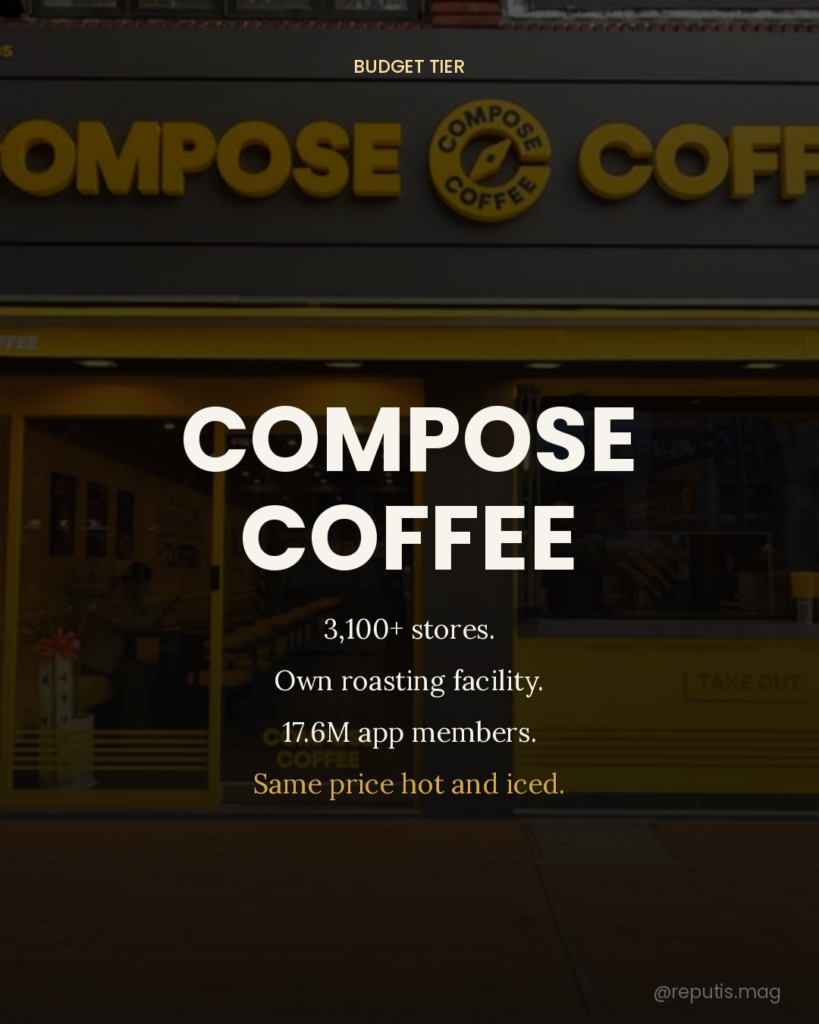
Mega Coffee was acquired in 2021 by a consortium led by PE fund Premier Partners and Wooyun Partners for approximately KRW 140 billion. In mid-2024, Compose Coffee was sold for around KRW 470 billion to a consortium consisting of the Philippines-based Jollibee Foods (70%), Elevation PE (25%), and Jollibee’s Titan Fund (5%).
Most recently, in January 2026, Orchestra Private Equity acquired Mammoth Coffee’s operator (Mammoth Coffee Lab) together with its affiliated bean roasting company (Seojin Roasters) for approximately KRW 100 billion — notably structuring the deal to capture both the franchise operation and its upstream supply chain.
The PE playbook in this sector is highly effective but aggressive. By rapidly increasing the number of franchise locations, these funds boost the corporate valuation, collect franchise fees along with distribution margins, and ultimately aim for a lucrative “exit” strategy. The financial results are undeniable. After being acquired in 2021, Mega Coffee saw its revenue increase from KRW 87.8 billion to approximately KRW 496 billion between 2021 and 2024—a roughly 5.6-fold increase. Over the same period, operating profits rose from KRW 42.2 billion to KRW 107.6 billion, more than doubling in size.
When Store Owners Pay the Price – 2026 Coffee Market in South Korea
While the corporate balance sheets look spectacular, the daily reality for individual franchise owners paints a very different picture. The aggressive push to open new locations naturally leads to intense competition among the stores themselves.
An alarming indicator of this operational strain is the increasing rate of store ownership transfers. According to the Korea Fair Trade Commission’s franchise disclosure data, Mega Coffee saw 539 new stores open in 2023, while 333 stores changed ownership in the same year. Experts point out that even without any negative brand scandals, the rising number of owners selling their shops suggests that the actual profits from running a store are falling far short of expectations. The brand itself grows exponentially, but the financial benefits do not necessarily trickle down to the local franchisees.
Following the Money: Dividends vs. Long-Term Growth
The root of this disconnect often lies in the core priorities of PE-influenced ownership. Their primary goal is maximizing returns for investors, which can sometimes come at the expense of long-term franchisee survival.
For instance, in its first year post-acquisition (2021), Mega Coffee paid out an astonishing 100% of its net profit as dividends to its shareholders. In subsequent years, dividend payout ratios remained extremely high—98% in 2022 and 89% in 2023—far exceeding the average for domestic companies. While payout ratios have since declined to 46.8% in 2024, vital long-term investments in franchisee support, brand quality improvement, and operational infrastructure were arguably deprioritized during those critical years.
Furthermore, the immense costs of massive marketing campaigns—such as signing a global football star as a brand ambassador—have been partially pushed onto franchisees. Reports indicate that Mega Coffee allocated around KRW 6 billion for annual advertising expenses and required franchisees to share roughly 50% of the cost, causing significant backlash and financial burden among store owners.
The Menu Creep: Ramen in a Coffee Shop?
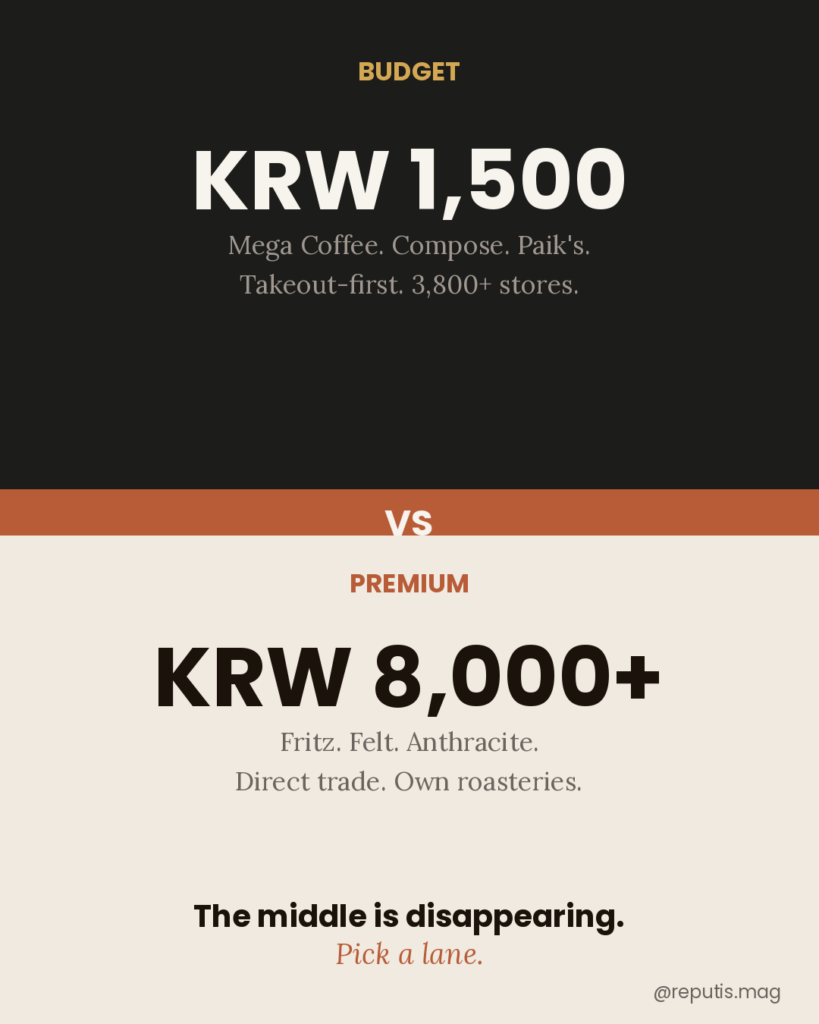
Fundamentally, budget coffee is a high-volume, low-margin business. Because consumers expect rock-bottom prices, simply selling more coffee isn’t enough to sustain the massive corporate growth targets.
The industry’s solution? An increasingly complex menu expansion. To boost profitability, brands are pushing highly profitable but labor-intensive items beyond traditional coffee. These range from cup-sized shaved ice desserts and yogurt ice cream to “ramen-ttang,” a crispy ramen noodle snack that became a viral hit after Mega Coffee introduced it in November 2024.
While these items yield higher margins than a cup of coffee, they are significantly more difficult and time-consuming to prepare. A single ramen-ttang order can take upwards of ten minutes, compared to one or two minutes for a standard coffee drink. This strategy has significantly increased the workload and labor burden for cafe staff on the ground, creating operational bottlenecks.
The Future of Korean Coffee Franchises
The South Korean budget coffee market is a fascinating case study of hyper-growth fueled by private capital. However, experts warn that for true longevity, a major shift in perspective is required.
It is worth noting that the landscape is already evolving.
In April 2025, PE fund Premier Partners completed its full exit from Mega Coffee, selling its remaining 17.7% stake and earning roughly double its original investment over the four-year holding period.
Regulatory scrutiny is also intensifying. In January 2026, the Korea Fair Trade Commission (KFTC) announced a sweeping overhaul of its franchise disclosure system. Under the proposed amendments — currently in the legislative notice stage and slated for completion in the first half of 2026 — franchise headquarters will be required to disclose whether they are owned by a private equity fund, along with the PE’s stake and acquisition date. Additional mandatory disclosures include long-term franchisee survival rates, store closure figures, and average termination penalties.
The update frequency for key metrics will also be tightened from once a year to once per quarter.
The intent is clear: to give prospective franchisees a clearer view of the risks associated with PE-owned franchise systems, including the possibility of ownership changes during the investment exit cycle.
Brands must look beyond short-term valuations and begin treating their franchisees as genuine partners.
By sharing profits fairly and investing in a sustainable future, a brand can secure its place in this highly competitive market. For global brands looking to enter Korea’s F&B landscape, the ultimate secret to success isn’t just brewing a great cup of coffee—it’s building a balanced, equitable business model that supports the people running your stores.
Was the above ‘2026 Coffee Market in South Korea’ helpful?
:: Check out other articles ::