Kim Ji-mi (1940-2025): The Elizabeth Taylor of Korean Cinema – A Legend Who Starred in 700 Films
Breaking News: The Passing of a Legend
Kim Ji-mi (김지미, born Kim Myung-ja), one of South Korea’s most prolific actresses, passed away on December 7, 2025 (reported December 9-10, 2025) in Los Angeles, California, at the age of 85. According to industry sources, her health had declined following complications from shingles.
The Korean film industry is mourning the loss of an icon who appeared in approximately 700 films over a career spanning four decades (1957-1992).
Key Facts:
- Birth: July 15, 1940, Daedeok County, South Chungcheong Province
- Death: December 7, 2025, Los Angeles, USA
- Age: 85 years old
- Cause: Complications from shingles leading to hypotensive shock
- Career Span: 1957-1992 (35 years)
- Total Films: Approximately 700
Who Was Kim Ji-mi? The Korean Elizabeth Taylor
Kim Ji-mi was dubbed “The Elizabeth Taylor of Korea” by South Korean media, not only for her stunning beauty but also for her glamorous personal life marked by multiple high-profile marriages and divorces.
Why “Elizabeth Taylor of Korea”?
- Unparalleled Beauty: Considered the most beautiful actress in Asia during her prime
- Multiple Marriages: Four marriages to prominent figures in Korean entertainment
- Screen Presence: Dominant star power and charisma
- Longevity: Maintained stardom across multiple decades
However, Kim Ji-mi famously rejected this comparison, stating: “Elizabeth Taylor is Elizabeth Taylor, and I am me.” This assertion of her own identity became a defining moment in her legacy.
Early Life and Career Beginnings: A Street Casting Miracle
The Discovery
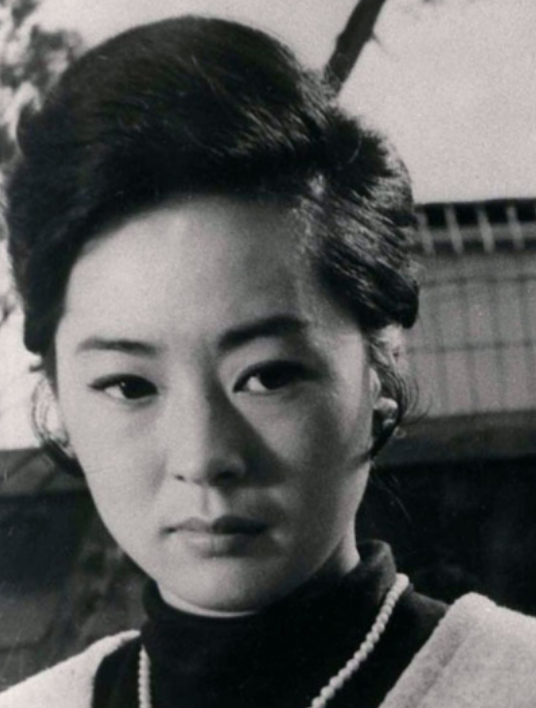
In 1957, while still a student at Deokseong Girls’ High School, 17-year-old Kim Myung-ja was planning to study abroad in the United States. Her life changed forever when legendary director Kim Ki-young spotted her on the streets of Myeongdong, Seoul’s bustling shopping district.
This “street casting” led to her debut in Kim Ki-young’s film “Hwanghon Yeolcha” (황혼열차 / Twilight Train) in 1957.
Overnight Fame
The following year, she achieved overnight stardom with the 1958 melodrama “Byeola Nae Gaseume” (별아 내 가슴에 / Star in My Heart), directed by Hong Seong-ki.
From this point forward, she adopted the stage name “Kim Ji-mi” (김지미), which would become synonymous with Korean cinema’s golden age.
ⓒ 2025 koreaonscreen.com. All rights reserved.
The Golden Age of Korean Cinema (1960s-1970s)
Chungmuro: Korea’s Hollywood
During the 1960s-1970s, Chungmuro (충무로) district in Seoul was the epicenter of Korean filmmaking, much like Hollywood in the United States. It was said that:
“Every screenplay in Chungmuro passed through Kim Ji-mi first.”
This phrase captured her unprecedented influence in the industry. Directors and producers would offer her first choice of roles, and her decision to accept or reject a project could determine its success.
The Power and Glamour
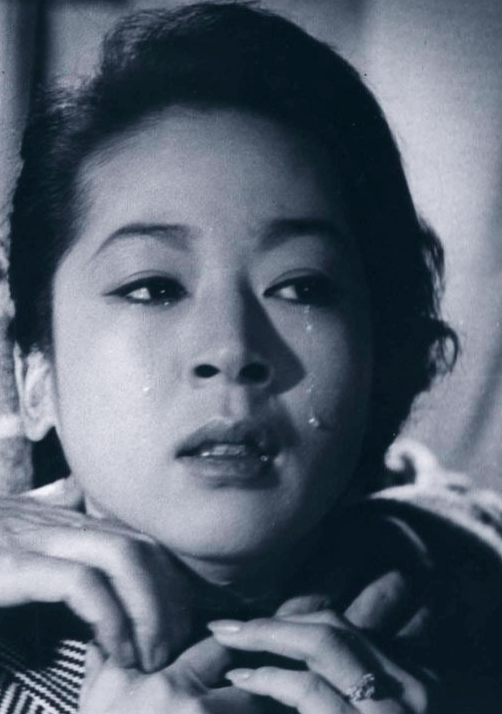
Kim Ji-mi embodied the modern, urban woman of her era:
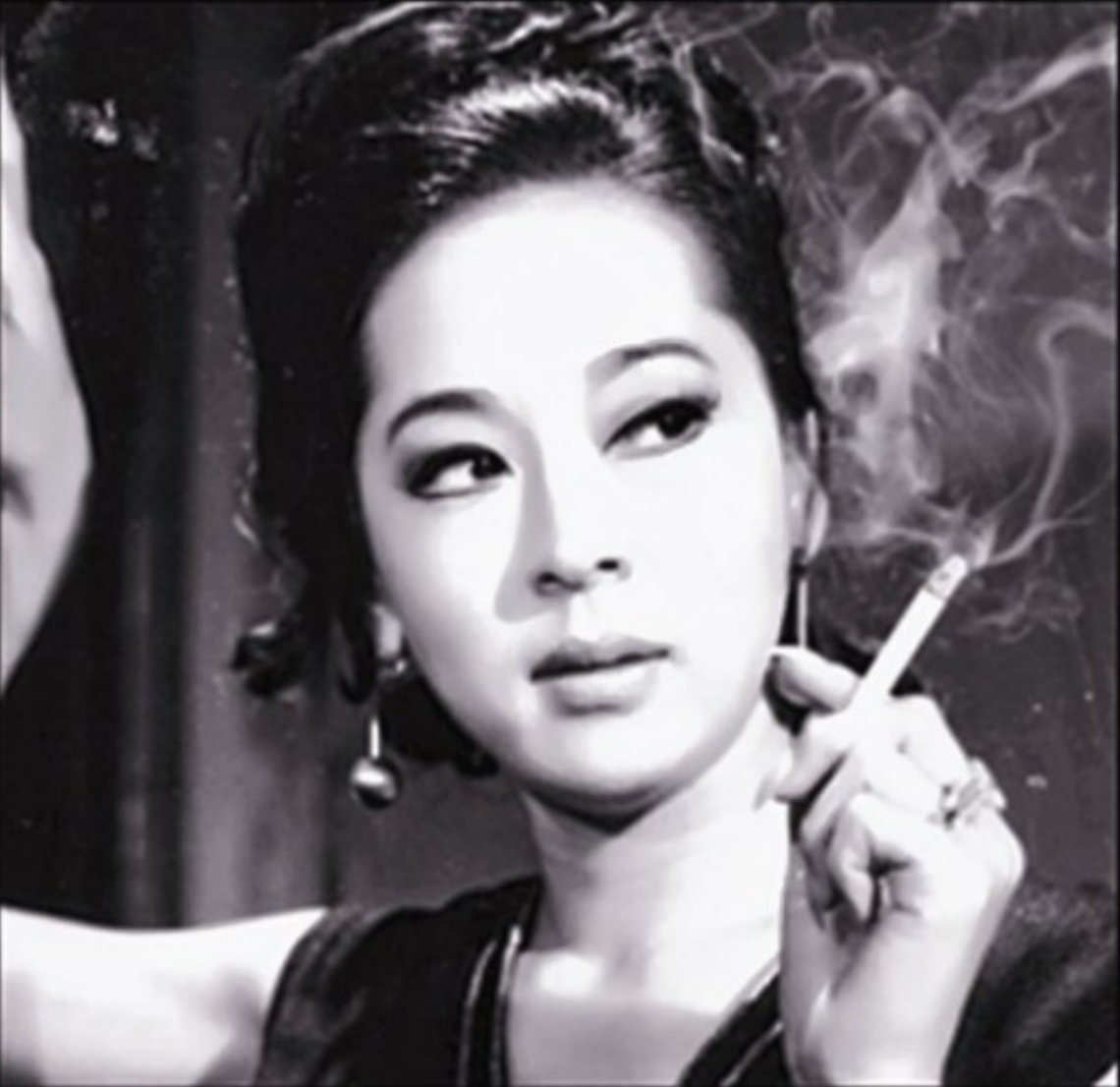
- Smoked cigarettes on screen in 1970 (shocking for conservative Korean society)
- Wore Western-style clothing and makeup
- Lived an independent, liberated lifestyle
Click the “Settings” (gear icon) at the bottom right of the video → Select “Subtitles/CC”→ Choose “Auto-translate”→ Select “English” (or your preferred language)
Iconic Film Roles and Filmography
Major Films
| Year | Film Title (English) | Korean Title | Director | Role | Awards |
|---|---|---|---|---|---|
| 1957 | Twilight Train | 황혼열차 | Kim Ki-young | Debut | – |
| 1959 | Three O’clock P.M. on a Rainy Day | 비 오는 날의 오후 3시 | Park Jong-ho | Lead | – |
| 1961 | Lady Jang (Jang Hee-bin) | 장희빈 | Jeong Chang-hwa | Jang Hee-bin | Box office success |
| 1961 | Chunhyang | 춘향전 | – | Chunhyang | – |
| 1965 | Fire Butterfly | 불나비 | Jo Hae-won | Femme fatale | Signature role |
| 1974 | The Land (Toji) | 토지 | Kim Soo-yong | Lead | Panama International Film Festival Best Actress |
| 1975 | Promises (The Body’s Promise) | 육체의 약속 | Kim Ki-young | Prisoner | Grand Bell Awards Best Actress |
| 1985 | Gilsotteum (Gil-so-deum) | 길소뜸 | Im Kwon-taek | Mother | Grand Bell Awards Best Actress |
| 1986 | Ticket | 티켓 | Im Kwon-taek | Lead | – |
| 1992 | Myeong-ja, Akiko, Sonia | 명자 아끼꼬 쏘냐 | Lee Jang-ho | Final role | – |
Signature Roles
1. Lady Jang (Jang Hee-bin, 1961)
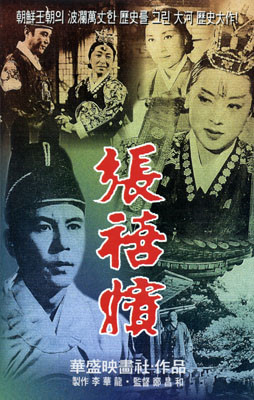
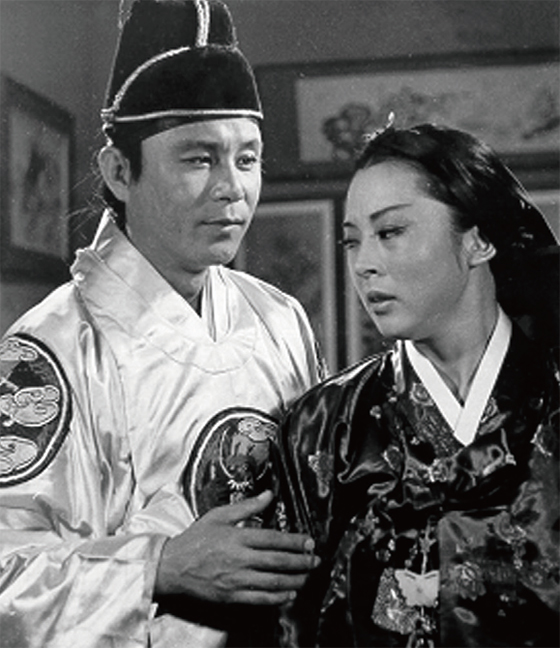
The original film portrayal of one of Korean history’s most infamous royal concubines. This role established the formula of “beautiful actress = Jang Hee-bin” that continues to this day. Later actresses who played this role include:
- Jeong Yun-hee
- Jeon In-hwa
- Kim Hye-soo
- Kim Tae-hee
The 1961 film was a massive box office success, drawing over 100,000 viewers in Seoul alone during the Chuseok (Korean Thanksgiving) holiday, establishing the tradition of “historical dramas for Chuseok.”
2. Fire Butterfly (1965) – The Original Femme Fatale
Kim Ji-mi’s portrayal of a mysterious woman entangled in murder became the archetype of the Korean femme fatale. This sophisticated, dangerous woman character influenced decades of Korean cinema.
3. Gilsotteum (1985) – Career Pinnacle
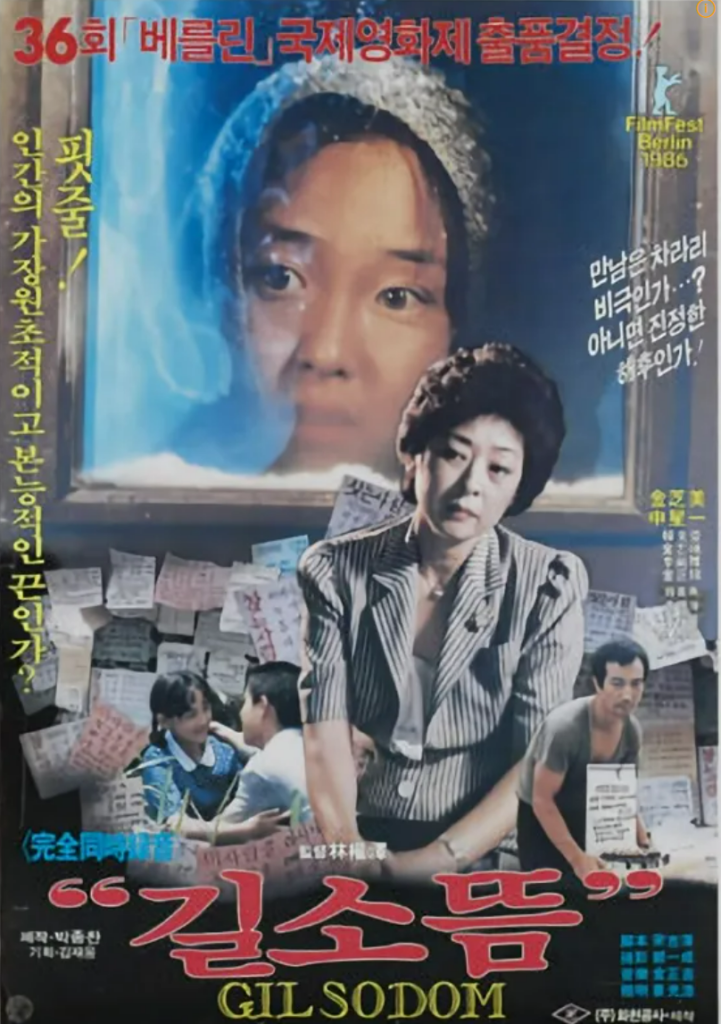
Her performance as a mother searching for her son separated during the Korean War division is considered one of the finest in Korean cinema history. She performed with her own voice (live sound recording), which was rare in 1980s Korean films.
Four Marriages: A Life in the Spotlight
Kim Ji-mi’s personal life was as dramatic as her on-screen roles, featuring four marriages to prominent figures in Korean entertainment:
Marriage 1: Hong Seong-ki (Director)
1958-1962
- Married one year after debut, age 18
- Divorced after 4 years
Marriage 2: Choi Mu-ryong (Actor)
1963-1969

- Major scandal in conservative 1960s Korea
- Famous quote upon divorce: “We part because we love each other” (사랑하기 때문에 헤어진다)
- Had one daughter
Marriage 3: Na Hoon-a (Singer)
1976-1982


- Common-law marriage (사실혼)
- Shocking news that dominated headlines
- Relationship ended in 1982
Marriage 4: Lee Jong-gu (Doctor)
1991-2002
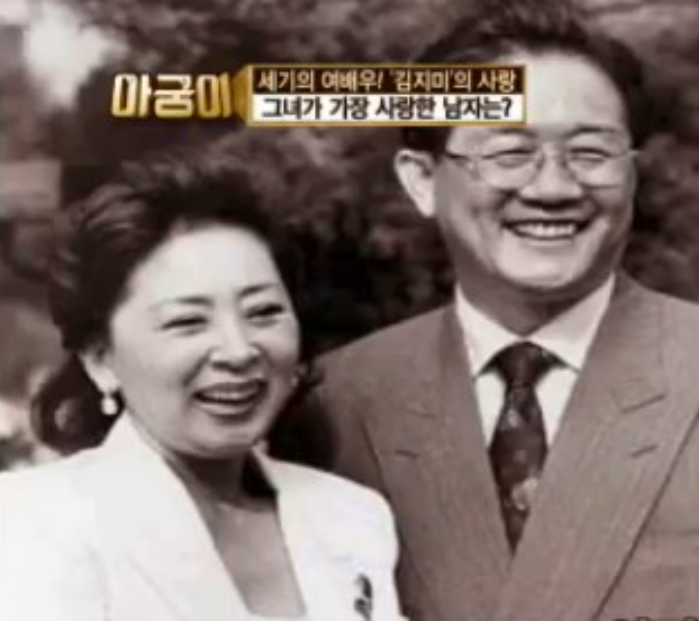
- Married a heart surgeon
- Divorced in 2002
- After this, she relocated permanently to Los Angeles
Progressive Feminism
In deeply conservative 1960s-70s Korea, Kim Ji-mi’s multiple marriages, divorces, and independent lifestyle made her a controversial yet admired figure. She represented:
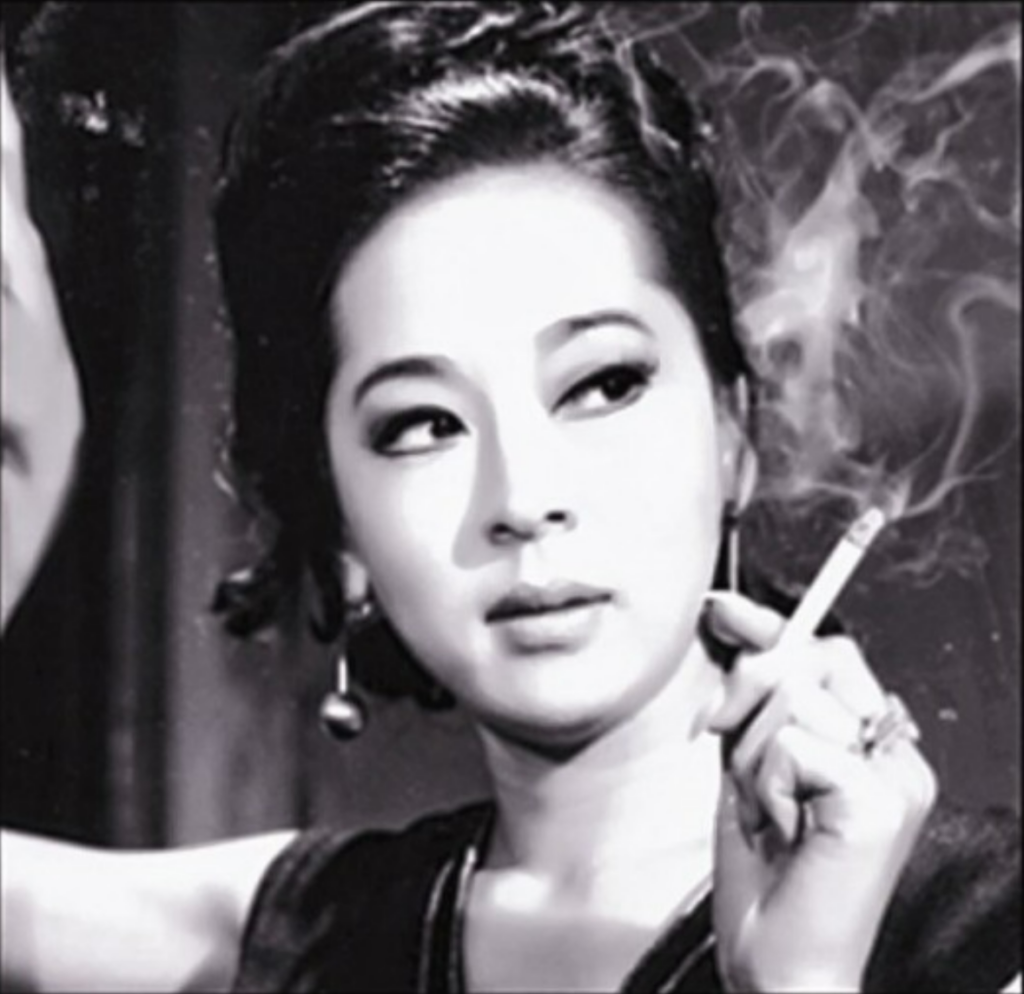
- Women’s autonomy in choosing partners
- Freedom to divorce unhappy marriages
- Professional success independent of marital status
- The emergence of the “New Woman” (신여성) in Korean society
Beyond Acting: Producer and Film Industry Leader
Jimi Film (1985-Present)
In 1985, Kim Ji-mi founded her own production company, “Jimi Film” (지미필름), becoming one of the first Korean actresses to transition into film production.
Notable Productions:
- Ticket (1986, director Im Kwon-taek)
- Total: 7 films produced
Leadership Roles
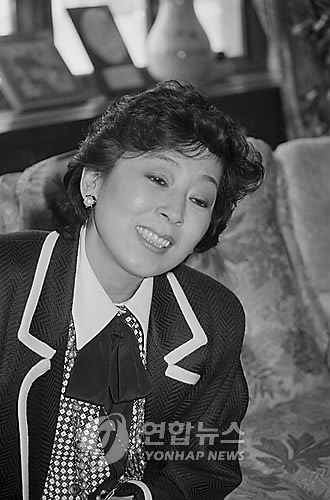
Kim Ji-mi was not only an actress but a film industry administrator:
er leadership during the Screen Quota debates helped protect Korean cinema from Hollywood dominance.
| Year | Position |
|---|---|
| 1995-2000 | President, Korean Film Actors Association (한국영화인협회 이사장) |
| 1998 | Co-Chair, Emergency Committee for Screen Quota Protection |
| 1999 | Commissioner, Korean Film Council |
Awards and Recognition
Major Awards
- Panama International Film Festival – Best Actress (The Land, 1974)
- Grand Bell Awards (Daejong Film Awards) – Best Actress (multiple times)
- Promises (1975)
- Gilsotteum (1985)
- Blue Dragon Film Awards
- Baeksang Arts Awards
Honors
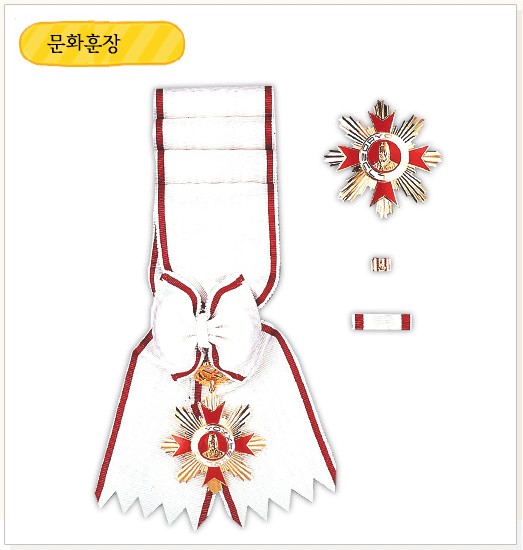
- 2010: Inducted into Korean Film Hall of Fame (영화인 명예의 전당)
- Title: “Glamorous Actress” (화려한 여배우)
- 2016: Silver Crown Cultural Merit (은관문화훈장)
- 2025: Golden Crown Cultural Merit (금관문화훈장) – Posthumously awarded, the highest cultural honor in South Korea
Legacy and Cultural Impact
Cultural Significance

- 700 Films = 700 Lives Kim Ji-mi famously said: “I lived 700 different lives through 700 films.”
- Beauty Standard When a new beautiful actress emerged, people would say: “But she’s not as beautiful as Kim Ji-mi.” She became the benchmark of beauty for an entire generation.
- Feminist Icon In an era of strict gender roles, she:
- Chose her own partners
- Divorced without shame
- Built her own business
- Led industry organizations
Final Words
At the 2019 Busan International Film Festival, at age 79, Kim Ji-mi gave her final public appearance:
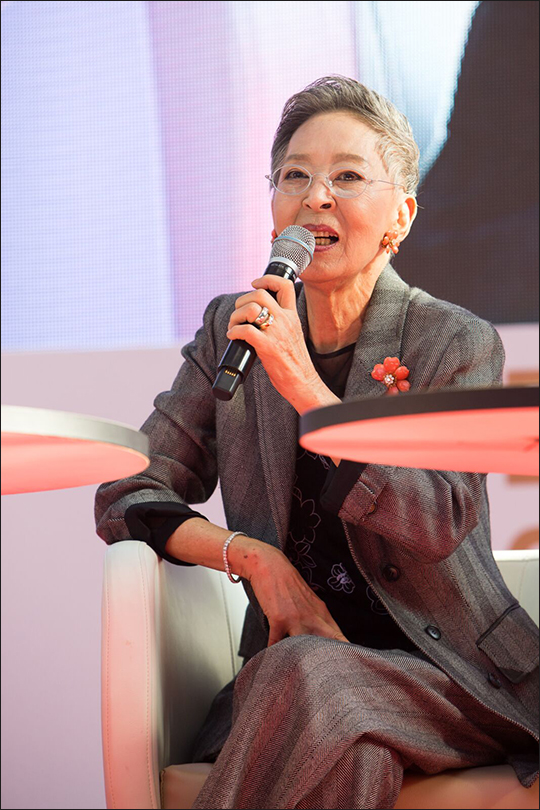
“As an actress and as a person, I am approaching the final station. I would be grateful if you would keep me in your hearts forever.”
Memorial Tributes
Following her death, the Korean film industry held memorial services:
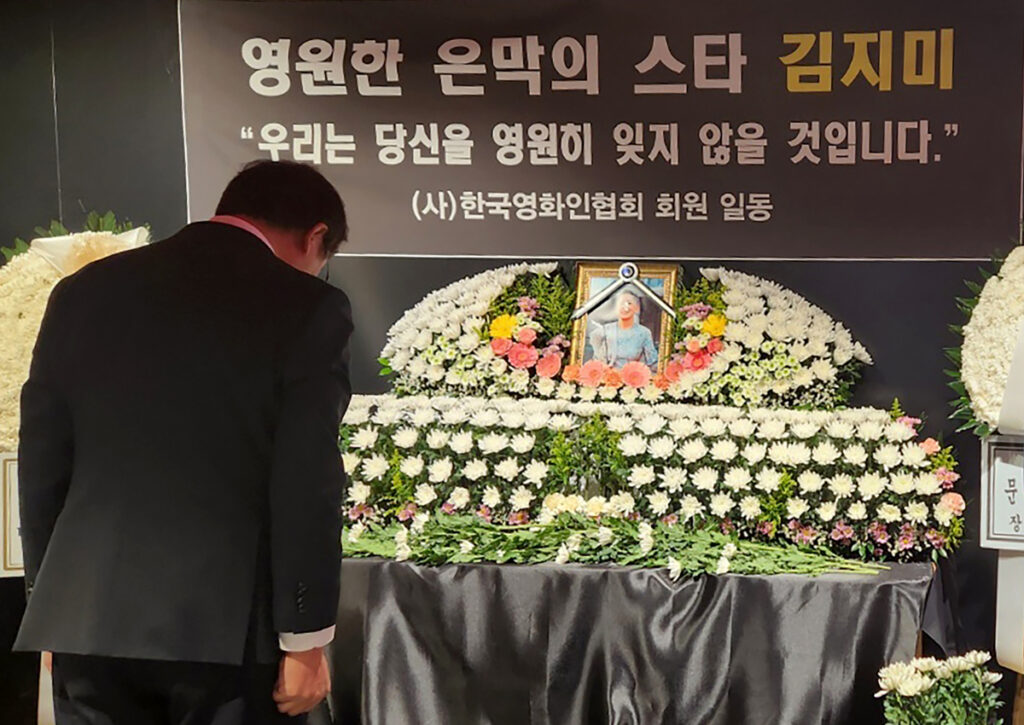

- Seoul Film Center (충무로): Memorial space and special screenings (December 11-14, 2025)
- Films screened: Promises, Eulhwa, Ticket
- Cremation: Completed in Los Angeles
- No Korean funeral: Per family wishes
Frequently Asked Questions (FAQ)
Q: How many films did Kim Ji-mi appear in?
A: Approximately 700 films according to unofficial counts. Official records show 370+ films, but Kim Ji-mi personally claimed over 700.
Q: Why was she called “The Elizabeth Taylor of Korea”?
A: Due to her striking beauty, multiple marriages, and dominant star power, similar to Hollywood legend Elizabeth Taylor. However, Kim Ji-mi rejected this comparison. You can find out why in the above Youtube Video.
Q: What was Kim Ji-mi’s real name?
A: Her birth name was Kim Myung-ja (김명자). She adopted the stage name “Kim Ji-mi” after her debut.
Q: How did Kim Ji-mi die?
A: She died from hypotensive shock following complications from shingles on December 7, 2025, in Los Angeles.
Q: What was her most famous role?

A: Her portrayal of Jang Hee-bin (Lady Jang, 1961) and the femme fatale in Fire Butterfly (1965) are considered her signature roles. Her performance in Gilsotteum (1985) is regarded as her artistic peak.
Q: Did Kim Ji-mi have children?
A: Yes, she had one daughter from her marriage to actor Choi Mu-ryong. She also adopted children during her marriages.
Q: Where can I watch Kim Ji-mi’s films?
A:
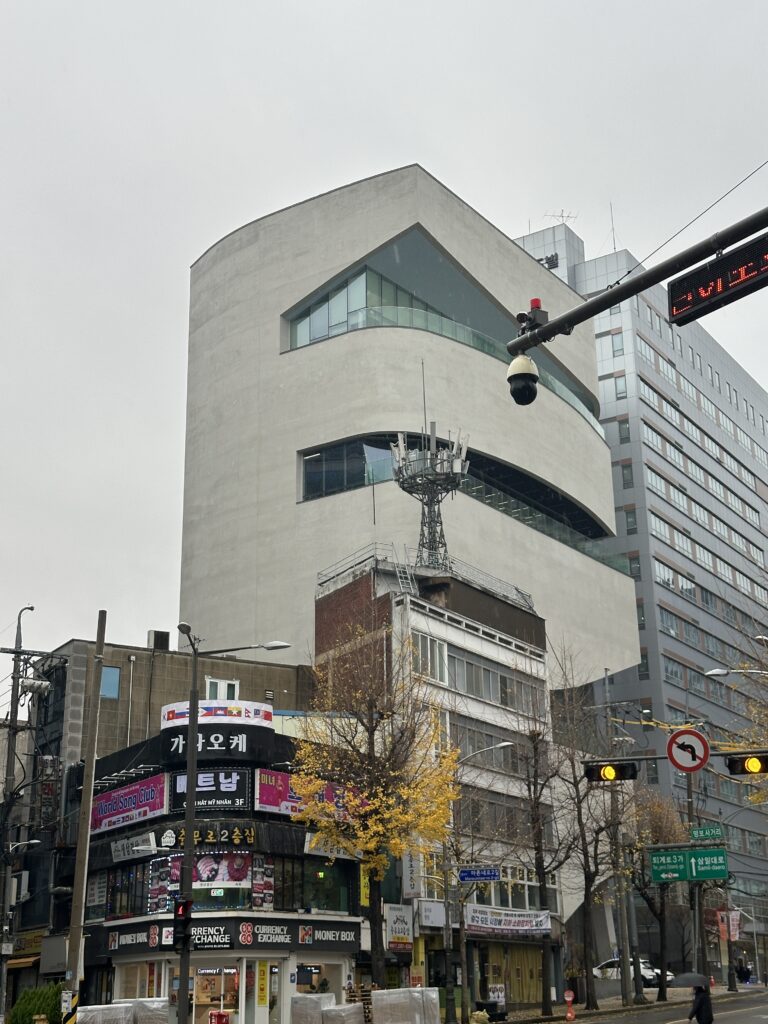
Seoul Film Center
ⓒ 2025 koreaonscreen.com. All rights reserved.
- Seoul Film Center (서울영화센터) in Chungmuro holds archives
- Korean Film Archive (한국영상자료원) in Seoul
- Some films available on Korean streaming platforms
Q: What is Kim Ji-mi’s lasting impact on Korean cinema?
A: She:
- Defined beauty standards for generations
- Pioneered the femme fatale archetype
- Broke social taboos around divorce and women’s independence
- Led the industry as both artist and administrator
- Inspired countless actresses who followed
Subscribe for more Korean history content and drama updates!


당신이 좋아할 만한

The Boutique Suite COEX: Seoul’s Most Luxurious Cinema Date (2026 Guide)

Kim Go-eun’s Shocking Transformation: From Shaman to Psychopath | Netflix’s “The Price of Confession”