Korean Sunscreen Guide: How to Choose the Best SPF for Your Skin Type
Korean sunscreens have gained international popularity for their lightweight formulas, advanced UV filters, and skincare benefits.
Unlike many Western sunscreens, K-beauty SPF products absorb quickly without leaving a white cast or greasy residue, making them ideal for daily wear under makeup.

Why Korean Sunscreens Are Different
Advanced UV Filters
Korean sunscreens use newer-generation chemical filters not yet approved by the FDA in the United States. The FDA labels sunscreens as over-the-counter drugs, which has slowed innovation.
According to licensed esthetician Charlotte Palermino, CEO and co-founder of Dieux Skin, “It has been over 20 years since the last filter was launched in the U.S.”

Korean sunscreens utilize filters like Uvinul A Plus, Uvinul T 150, Tinosorb M, and Tinosorb S that protect against both UVA and UVB rays. These filters work at the skin’s surface rather than absorbing into the bloodstream, similar to how mineral sunscreens function.
The PA Rating System
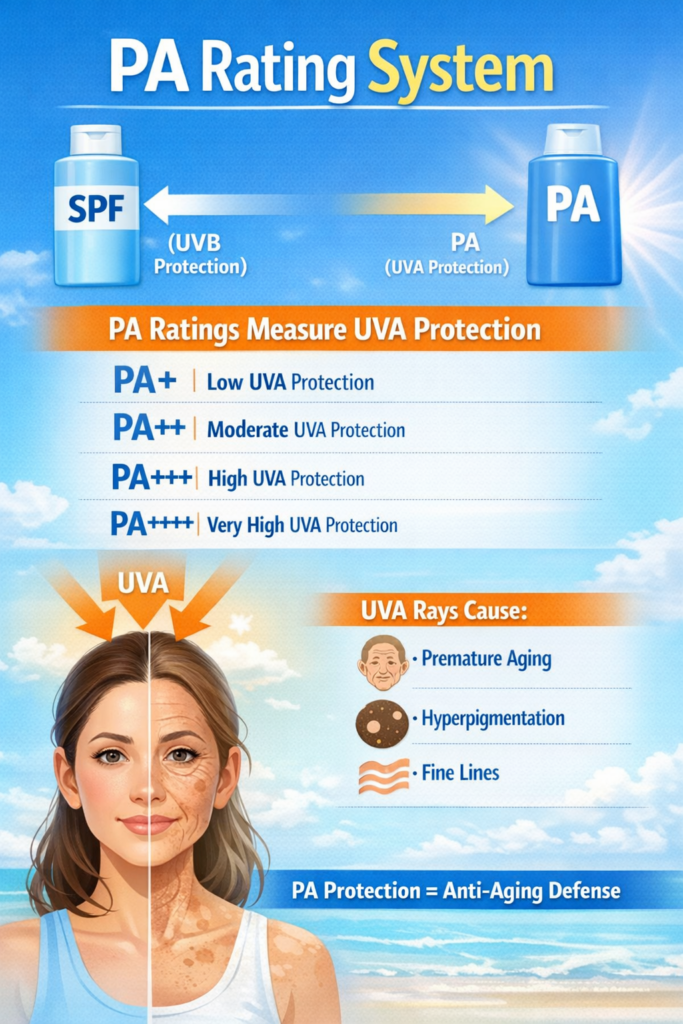
While American sunscreens primarily use SPF ratings (which measure UVB protection), Korean products also include PA ratings that measure UVA protection. The PA system uses one to four plus symbols:
- PA+ indicates low UVA protection
- PA++++ indicates very high UVA protection
UVA rays are responsible for premature aging, hyperpigmentation, and fine lines, making PA ratings crucial for anti-aging protection.
Skincare-Infused Formulas
Board-certified dermatologist Dr. Claire Chang notes that “many Korean sunscreens are also formulated with skincare ingredients, like hyaluronic acid, niacinamide and Centella asiatica to improve skin health along with protecting the skin.”
Types of Korean Sunscreens

Chemical Sunscreens
Chemical (or organic) sunscreens absorb UV radiation and convert it to heat. Most popular Korean sunscreens use chemical filters because they create lightweight, transparent formulas without white cast.
Mineral Sunscreens
Mineral (or physical) sunscreens use zinc oxide or titanium dioxide to reflect UV rays away from the skin. While less common in K-beauty, some Korean brands offer mineral options for sensitive skin.
Hybrid Sunscreens
These combine both chemical and mineral filters to balance effectiveness with cosmetic elegance.
How to Choose by Skin Type

| Skin Type | Recommended Texture | Key Ingredients to Look For | Ideal Finish | Additional Notes |
|---|---|---|---|---|
| Dry or Dehydrated | Moisturizing cream or lotion | Hyaluronic acid, glycerin, ceramides, panthenol | Dewy or glowing | Can replace morning moisturizer; provides all-day hydration |
| Oily or Combination | Lightweight serum or gel (“water-fit” formulas) | Oil-control ingredients, sebum-regulating extracts | Natural or semi-matte | Feels almost weightless; quick-absorbing; won’t add excess oil |
| Sensitive or Acne-Prone | Fragrance-free, gentle formulas | Centella asiatica, madecassoside, cica extract | Any (based on preference) | Non-comedogenic; minimal essential oils; hypoallergenic; avoid heavy fragrances |
| Normal | Any texture works | Based on additional skincare goals | Any (based on preference) | Most Korean sunscreens suitable; choose based on preferred finish |
Understanding Texture and Finish
Texture Guide
| Texture Type | Description | Best For |
|---|---|---|
| Serum-type | Ultra-lightweight, almost imperceptible on skin | Oily skin, humid climates, layering under makeup |
| Gel-type | Fresh, cooling sensation that absorbs quickly | Oily to combination skin, summer wear |
| Lotion-type | Balanced between hydration and lightness | Normal to combination skin, year-round use |
| Cream-type | More moisturizing with richer texture | Dry skin, cold/dry climates |
| Stick-type | Portable solid format | Easy reapplication, travel, on-the-go touch-ups |
Finish Guide
| Finish Type | Effect | Best For |
|---|---|---|
| Dewy | Adds glow and luminosity to skin | Dry or dull skin, glass skin look, photography |
| Natural | No visible shine or matte effect | All skin types, everyday natural makeup look |
| Semi-matte | Subtle finish without greasiness | Oily or combination skin, makeup base |
Key Ingredients to Look For
| Skincare Goal | Recommended Ingredients | Benefits |
|---|---|---|
| Hydration | Hyaluronic acid, Glycerin, Ceramides, Panthenol (Vitamin B5), Beta-glucan | Moisture retention, skin barrier support, plumpness |
| Soothing | Centella asiatica (Cica), Madecassoside, Green tea extract, Aloe vera | Calms irritation, reduces redness, anti-inflammatory |
| Brightening | Niacinamide (Vitamin B3), Vitamin C derivatives, Rice extract, Licorice root extract | Even skin tone, fade dark spots, radiance boost |
| Anti-Aging | Adenosine, Peptides, Vitamin E, Antioxidants | Reduce fine lines, protect against free radicals, firmness |
Application Guidelines
According to skincare experts, proper application is crucial for effectiveness:
- Amount: Apply approximately 0.8 grams (about a nickel-sized amount) for face and neck
- Timing: Use as the final step in your morning skincare routine, before makeup
- Reapplication: Reapply every two hours during direct sun exposure
- Layering: Wait 1-2 minutes after application before applying makeup
What to Expect
No White Cast
Most Korean chemical sunscreens blend transparently into all skin tones without leaving a white or gray cast. This is one of their major advantages over many Western sunscreens.
Comfortable Wear
Korean sunscreens are designed for daily facial use in various climates, including hot and humid conditions. They typically don’t feel heavy or suffocating on skin.
Makeup Compatibility
These sunscreens generally layer well under makeup without pilling or causing foundation to separate.
Where to Purchase
Korean sunscreens are available through:
- Korean beauty online retailers
- Major e-commerce platforms
- International beauty stores
- Korean specialty shops in major cities
Price Considerations
Korean sunscreens are generally more affordable than premium Western brands, typically ranging from $9-17 USD for 50ml tubes. However, due to potential tariff changes and international shipping, prices may fluctuate.
Common Questions
Do I need separate moisturizer? It depends on the sunscreen formula and your skin type. Some moisturizing sunscreens can replace morning moisturizer for normal to dry skin. Oily skin may prefer lightweight sunscreens after a light moisturizer.
Can I use Korean sunscreen daily? Yes, these sunscreens are specifically formulated for daily use and are designed to be comfortable for all-day wear.
Will it work under makeup? Most Korean sunscreens are designed to work well under makeup without pilling or affecting foundation application.
This article provides general information about Korean sunscreen products and their characteristics based on publicly available information. Individual results may vary based on skin type, climate, and personal preferences. UV filter availability and product formulations are subject to change. This content is for informational purposes only and does not constitute medical or dermatological advice. Consult with a dermatologist for personalized skincare recommendations, especially if you have specific skin concerns or conditions. Always perform patch tests before using new skincare products. Product availability and pricing may vary by region and are subject to international trade policies.
:: Check out other articles ::
- Heavy Metals in Lipstick: What Korea’s MFDS and Global Rules Actually Require (2026)
- OSULLOC x LE SSERAFIM Photocard Event & Prices (2026)
- The Moomin Business : How an 80-Year-Old Finnish Troll Built an €820M Brand + Café Aalto by Meal° (Seoul)
- 2026 Coffee Market in South Korea: Inside the Private Equity Takeover
- The Boutique Suite COEX: Seoul’s Most Luxurious Cinema Date (2026 Guide)