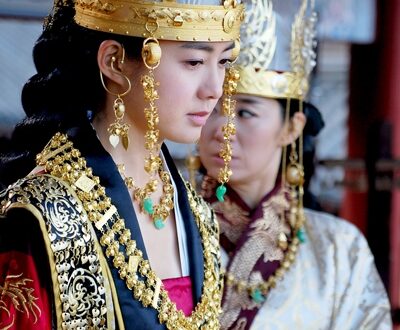
King Munmu: The Dragon King Who United Korea – 2026 KBS Drama Revealed [Video]
Korea’s Underrated Historical Hero
For over 1,300 years, King Munmu of Silla has rested beneath the waves of the East Sea, transformed into a dragon to eternally protect Korea. His story—one of brilliant strategy, personal sacrifice, and ultimate triumph—has remained largely unknown to international audiences. Until now.

In 2026, KBS will premiere “Munmu” (文武), a $300 million epic historical drama that finally brings this legendary king’s story to the world stage. But who was King Munmu, and why does his legacy matter today?
Who Was King Munmu? The Warrior King Who Changed Korean History
The Man Behind the Legend

King Munmu (626-681 AD), born Kim Beop-min, was the 30th ruler of the Silla Kingdom and the architect of Korean unification. Unlike many historical figures whose legends overshadow their actual achievements, Munmu’s real accomplishments are even more impressive than the myths.
Key Facts:
- Reign: 661-681 AD (20 years)
- Major Achievement: First unification of the Korean Peninsula (676 AD)
- Military Record: Defeated both Baekje (660) and Goguryeo (668), then expelled Tang China (676)
- Legacy: Established Unified Silla, laying the foundation for modern Korea
From Prince to Unifier: Munmu’s Path to Greatness
Munmu didn’t start as a promising heir. As the eldest son of King Muyeol (Kim Chun-chu) and nephew of the legendary General Kim Yu-sin, he grew up in the shadow of giants. His early years were marked by:
- Witnessing his father’s diplomatic humiliation by Tang China
- Learning warfare from his uncle Kim Yu-sin, Korea’s greatest general
- Developing the strategic patience that would define his reign

The Three-Stage Unification: Munmu’s Masterplan
Stage 1: Defeating Baekje (660 AD)
The southwestern kingdom of Baekje fell first. Working alongside his father King Muyeol and General Kim Yu-sin, Prince Beop-min participated in the Baekje campaign that ended in 660 AD. This victory proved the Silla-Tang alliance could work.
Stage 2: Conquering Goguryeo (668 AD)
After ascending to the throne in 661, Munmu faced his greatest challenge: Goguryeo, the military superpower of Northeast Asia. The kingdom that had repelled Tang China’s invasions for decades finally fell in 668 AD, but this victory contained the seeds of Munmu’s next conflict.
Stage 3: The Silla-Tang War (670-676 AD) – The Real Test
Here’s where Munmu’s genius truly shines. After helping Tang China conquer Baekje and Goguryeo, he realized the Chinese had no intention of leaving the Korean Peninsula. What followed was six years of the most sophisticated diplomatic-military strategy in Korean history.
The Dragon King Legend: Death and Eternal Protection
The Deathbed Wish
In 681 AD, as King Munmu lay dying, he made an extraordinary request: cremate his body and scatter the ashes in the East Sea. He believed he would transform into a dragon to eternally protect Korea from foreign invaders.
His exact words (from historical records): “Even in death, I will become a dragon of the East Sea and protect this nation from invasions.”
The Underwater Tomb: Daewangam (Great King Rock)
Today, you can still visit King Munmu’s resting place:
- Location: East Sea, near Gyeongju, South Korea
- Structure: Underwater rock formation with a cross-shaped waterway
- Design: Allows sea water (and presumably dragons) to flow freely
- Status: Designated Korean Historic Site #158
Scholars debate whether Munmu truly believed he’d become a dragon or if this was symbolic, but the gesture reveals his character: even in death, duty to Korea came first.

2026 KBS Drama “Munmu”: Everything We Know
Production Details
Budget: $300 million USD (highest for any KBS historical drama) Episodes: 28 episodes Broadcast: Second half of 2026 Network: KBS (Korean Broadcasting System) International: Netflix global distribution confirmed
Why This Drama Matters
For 13 years, Korean historical dramas have largely ignored the Unified Silla period. The last major production was “The Great Queen Seondeok” (2009). “Munmu” represents:
- KBS’s return to epic historical dramas after TV license fee reunification
- First proper depiction of the Silla-Tang War in Korean drama history
- $300M commitment to historical accuracy and production value
The Creative Team
Directors: Kim Young-jo (Prison Playbook, Hospital Playlist), Koo Seong-jun
Writers: Kim Ri-heon, Hong Jin-yi
Production Companies: KeyEast Entertainment, Monster Union
Star-Studded Cast: Who’s Playing Who
Lee Hyun-wook as King Munmu (Kim Beop-min)

Why This Casting Works: Lee Hyun-wook brings intensity and depth to complex characters. His portrayal will capture Munmu’s transformation from impulsive prince to calculating strategist.
Character Description: A man of fierce pride and unshakeable courage, yet cold-headed enough to swallow humiliation for his nation’s sake. The ultimate pragmatic idealist.
Jang Hyuk as Yeon Gaesomun

The Return: After a 3-year hiatus from historical dramas, Jang Hyuk returns to play Goguryeo’s legendary strongman—the “God of War” who repelled Tang invasions but whose dictatorship ultimately doomed his kingdom.
Why It’s Perfect: Jang Hyuk’s intensity and martial arts skills make him ideal for portraying history’s most controversial Korean military leader.
Kim Kang-woo as King Taejong Muyeol (Kim Chun-chu)

The Father Figure: After 10 years away from historical dramas, Kim Kang-woo returns to play Munmu’s father—the diplomatic genius who unified Silla through strategic marriages and alliances.
Park Sung-woong as General Kim Yu-sin

Full Circle: Remarkably, Park Sung-woong played Kim Yu-sin 15 years ago in “The Great Queen Seondeok” (2009). Now, at 51, he returns to the same role with deeper maturity.
Character Significance: Kim Yu-sin is to Korea what George Washington is to America—the military founder of the nation. His relationship with nephew Munmu forms the emotional core of the story.
Supporting Cast
- Jung Woong-in as Kim Jinju (Silla court’s hidden power broker)
- Jo Sung-ha as King Yeongnyou of Goguryeo (Go Geon-mu)
Historical Accuracy: What the Drama Will Show
The Controversies They’re Addressing
1. The “Betrayal” Narrative
For centuries, Korean historians influenced by Confucian values criticized Munmu for “betraying” Tang China. The Dongguk Tonggam (동국통감), compiled in 1485 during the Joseon Dynasty, particularly harsh:
“King Munmu lacked loyalty and righteousness, turning against his benefactor Tang.”
Modern Perspective: This criticism reflects Joseon’s Neo-Confucian worldview and subservience to China, not historical reality. Munmu didn’t “betray” anyone—he defended Korean independence against foreign occupation.
2. The Diplomatic Humiliation
The drama will likely show the painful moments when Munmu had to:
- Send tribute to Tang while fighting Tang forces
- Accept subordinate titles from the Chinese emperor
- Negotiate from a position of military weakness
These scenes will resonate with modern audiences who understand the complexity of small-nation diplomacy.
Why King Munmu’s Story Matters Today
Leadership Lessons from 1,300 Years Ago
1. Strategic Patience Munmu waited years for the right moment to turn against Tang, enduring humiliation while building strength.
2. Pragmatic Idealism He balanced Korea’s independence (the ideal) with temporary submission (the pragmatic necessity).
3. Long-term Vision Every decision aimed at unified Korea’s survival, not personal glory or short-term gain.
Modern Parallels
Munmu’s situation resonates with contemporary geopolitics:
- Small nations navigating between great powers
- Diplomatic finesse combined with military readiness
- National identity versus international pressure
South Korea today faces similar challenges between the US and China—making Munmu’s story oddly relevant.
How to Watch the Drama (2026)
Broadcast Schedule
Korea:
- KBS1 or KBS2
- Likely Saturday-Sunday primetime slot
- 28 episodes (14 weeks)
International:
- Netflix global streaming (confirmed)
- English subtitles available
- Possible simultaneous release or 1-week delay
Where to Learn More
Official Sources:
- KBS Drama Official Website (updates coming in 2025)
Follow the Production:
- Instagram: @kbsdrama_official
- Twitter: @KBSWorldTV
- YouTube: KBS Drama Channel
The Cultural Impact: Why This Drama Could Be Huge
Filling the Historical Gap
Korean historical dramas typically focus on:
- Joseon Dynasty (1392-1910): 70% of all sageuks
- Goryeo Period (918-1392): 20%
- Three Kingdoms Era (57 BC – 668 AD): 10%
- Unified Silla (676-935): Almost nothing
“Munmu” fills a massive gap in Korean popular culture’s understanding of its own history.
Educational Value
The drama will introduce international audiences to:
- Korean history beyond Joseon Dynasty
- The Silla-Tang War (unknown outside Korea)
- Ancient Korean military strategy
- 7th-century East Asian geopolitics
Visiting King Munmu’s Legacy Today
Must-Visit Historical Sites
1. Daewangam (Great King Rock)

- Location: Bonggil-ri, Yangbuk-myeon, Gyeongju
- Access: Free, visible from shore
- Best Time: Sunrise (symbolic of Munmu’s eastern protection)
2. Gyeongju Historic Areas

- UNESCO World Heritage Site
- Key Sites: Bulguksa Temple, Seokguram Grotto, Tumuli Park
- Connection: All built during or after Munmu’s reign
3. Gyeongju National Museum

- Exhibits: Unified Silla artifacts
- Free Admission: Permanent collection
- Must-See: Gold Crown of Silla
Trump’s Golden Crown: The 1,500-Year-Old Korean Treasure You’ve Seen in K-Dramas – Korea On Screen
Planning Your Visit
From Seoul:
- KTX train to Singyeongju Station (2 hours)
- Bus or taxi to Gyeongju city center (20 minutes)
- Rent a bicycle to explore historical sites
Best Season:
- Spring (cherry blossoms) or Fall (foliage)
- Avoid summer humidity and winter cold
The Dragon King Lives: Final Thoughts
King Munmu’s story transcends historical drama—it’s a masterclass in strategic thinking, national leadership, and personal sacrifice. His decision to become a dragon, whether literal belief or poetic metaphor, symbolizes the ultimate dedication to country.
As we await the 2026 premiere of KBS’s “Munmu,” we’re not just anticipating another historical drama. We’re about to witness the resurrection of Korea’s most underrated hero, brought to life with modern technology and storytelling.
The Dragon King is rising again. And this time, the whole world will know his name.
Watch Our Complete Video Breakdown
Click the “Settings” (gear icon) at the bottom right of the video → Select “Subtitles/CC”→ Choose “Auto-translate”→ Select “English” (or your preferred language)
Subscribe for more Korean history content and drama updates!
- Glass Hair: 3 K-Beauty Products for the Trend That Replaced Glass Skin (2026)
- The Complete Lady Dua Beauty Breakdown – 3 Lip Products, 1 Iconic Look
- Korea House Seoul: The Hidden Hanok Cafe Most Tourists in Subway line 3 Walk Right Past
- BLACKPINK × National Museum of Korea: The Collab That Changed K-Culture
- 13 Seoul R&B NAVY GLOW’s Seoul Night, Got Me In My Zone — A Trapsoul About Being a Foreigner


당신이 좋아할 만한

The Tyrant’s Chef (폭군의 셰프) OST Singer Jang Min Ho: The Heartbreaking Story Behind ‘Forget You Not

4 Most Anticipated Korean Dramas and Movies Coming in 2026