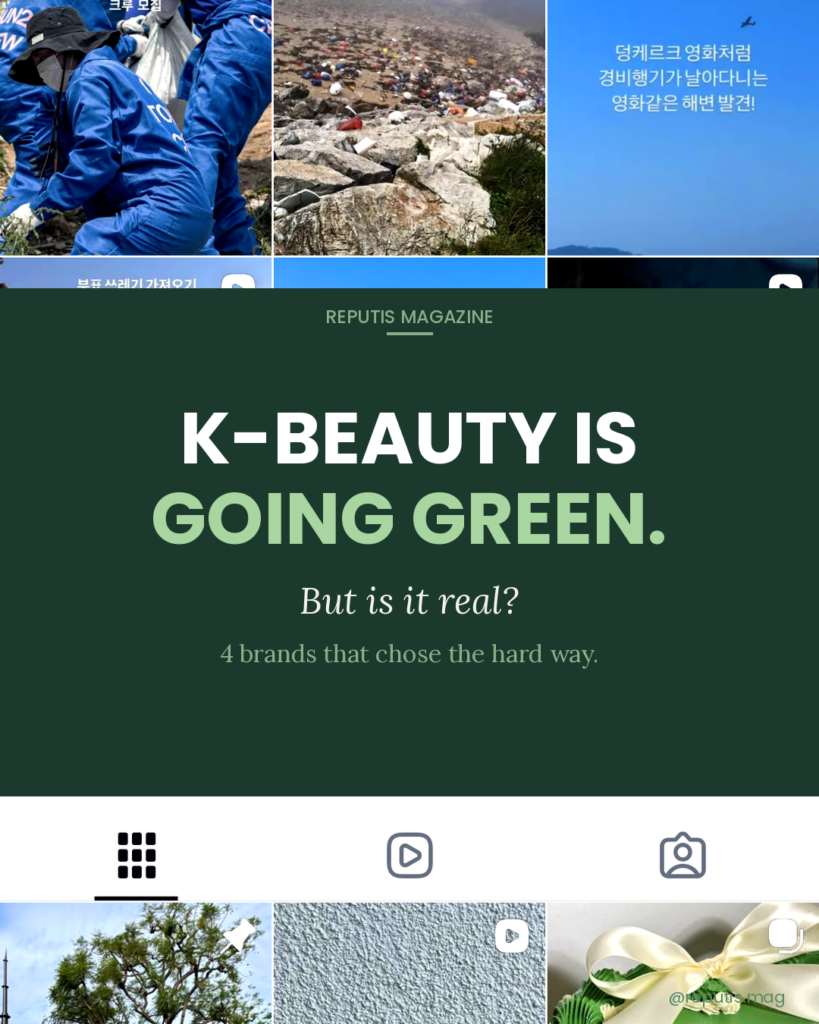
Stories of 4 Korean Cosmetic Brands | K-Beauty Is Going Green – But Is It Real?
Everyone’s talking about clean beauty. Fewer are doing the hard work behind it. Here are 4 Korean Cosmetic Brands that chose the expensive path, the slow path, the uncomfortable path — and what that actually looks like.
Toun28
Maria Jung spent over 15 years as a cosmetics researcher before she developed a chemical allergy from testing her own products. That experience became the foundation for Toun28, a brand she co-founded with Joon Soo Park, formerly of LG Electronics’ data division.
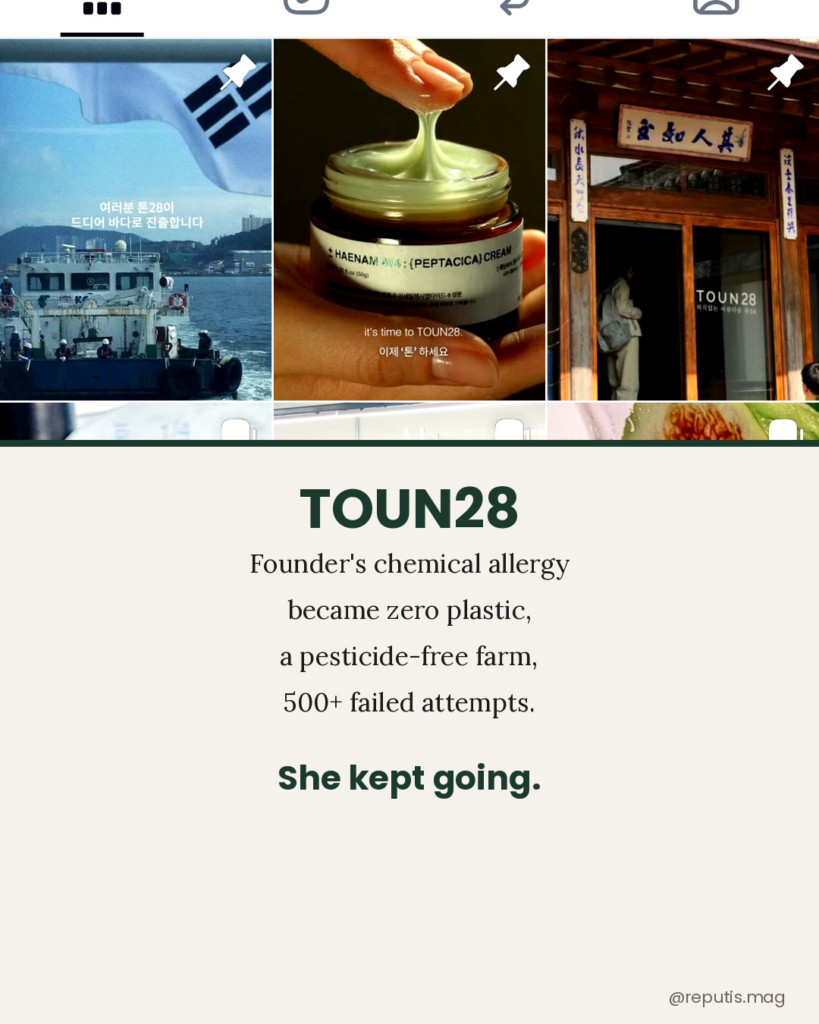
Toun28 uses zero plastic packaging. Every container is made from paper — a material the team tried over 500 times to develop into a functional cosmetics package before it worked. The brand owns a pesticide-free farm where staff grow raw plant ingredients from scratch, which are then extracted and manufactured in-house. Up to 90% of each product’s cost goes to ingredients. Only 10% goes to packaging.
The approach is slow by design. As Park puts it: “The era when convenience changes the world is over. Now, discomfort changes the world.”
Aromatica
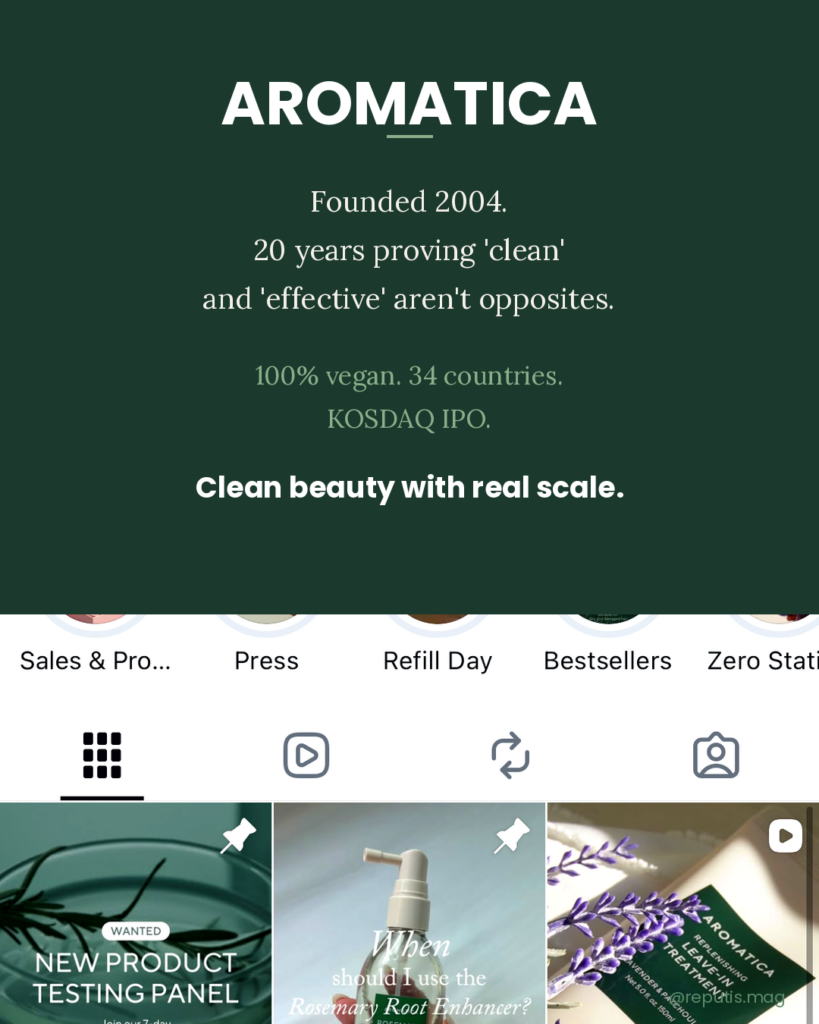
Aromatica was founded in 2004 — two decades before “clean beauty” became a marketing category. The brand spent those 20 years building something that most competitors still struggle with: proof that clean formulas and effective results aren’t mutually exclusive.
Every Aromatica product is 100% vegan, free of animal-derived ingredients and synthetic fragrances. The company operates refill stations and runs an empty bottle collection program. As of 2025, Aromatica exports to 34 countries and recorded annual revenue of KRW 52.6 billion, with a three-year average growth rate of 33.4%.
In November 2025, Aromatica went public on KOSDAQ. The IPO raised KRW 24 billion, which the company plans to invest entirely in global marketing and overseas retail expansion — including flagship experience stores in Seoul, LA, New York, and Tokyo. Clean beauty, but with real scale behind it.
Donggubat
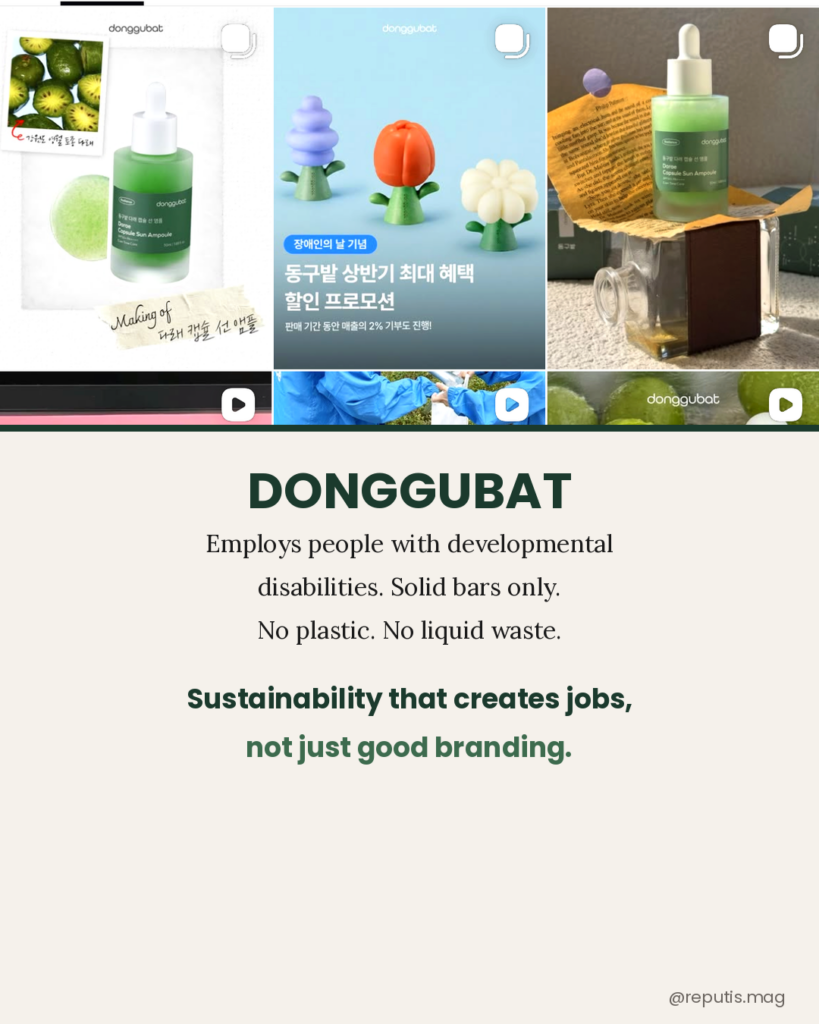
Donggubat is a social enterprise that makes solid-format personal care products — shampoo bars, soaps, hand creams. No liquid products. No plastic bottles. No liquid waste.
What makes Donggubat different from other eco-conscious brands is its core mission: the company employs people with developmental disabilities. This isn’t a CSR initiative or a side program. It’s the reason the company exists. Every product is made by a team where disabled and non-disabled employees work together.
In a market full of brands that talk about sustainability, Donggubat is one of the few where the social impact is built into the business model itself — not layered on top of it.
Innisfree
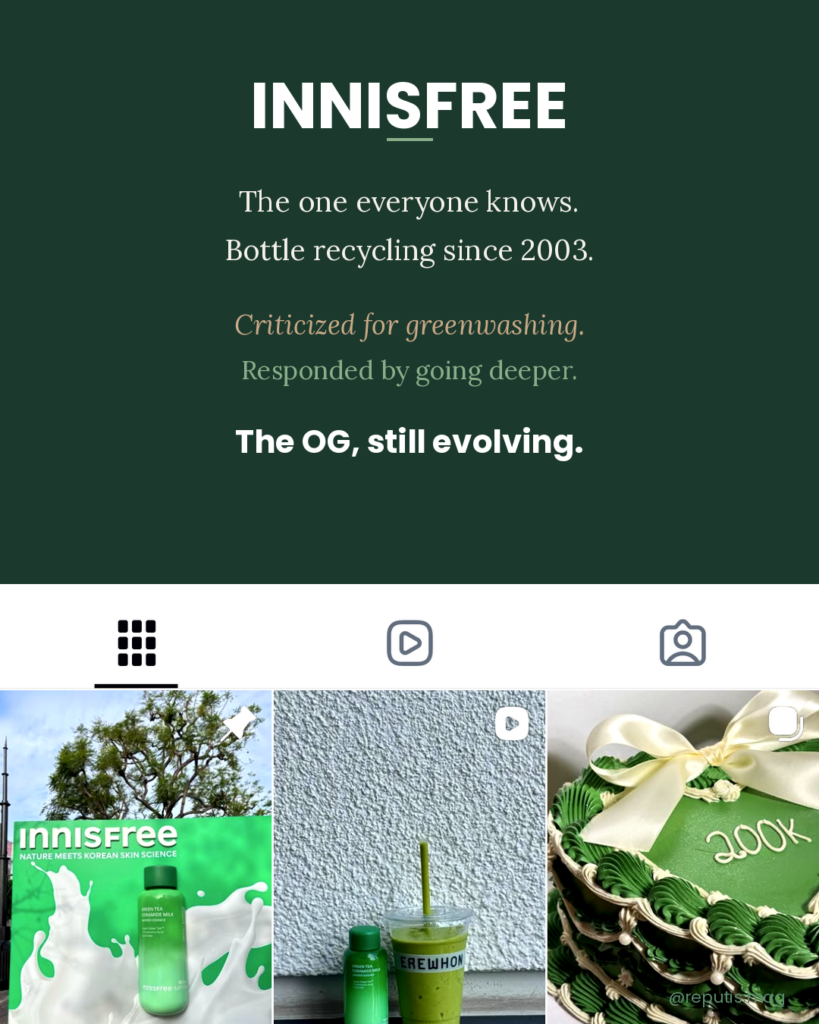
Innisfree is the brand everyone knows. Jeju Island ingredients. Green tea. Nature-inspired packaging. It’s been the face of Korean eco-beauty for over two decades.
It’s also been criticized. Innisfree has faced greenwashing accusations from Korean consumers and media — questions about whether the brand’s environmental claims match the reality of its practices. That criticism matters, and Innisfree’s response has been to go deeper rather than defensive: biodegradable packaging, upcycled green tea byproducts, reformulated products without the shortcuts.
The brand’s empty bottle collection campaign has run continuously since 2003 — 22 years and counting. Between 2011 and 2024, the program collected approximately 1,294 tons of plastic and glass bottles for recycling. That’s not a marketing campaign. That’s infrastructure.
Innisfree isn’t perfect. But it’s evolving. And in a market where many brands launch with green branding and abandon it when it gets expensive, the fact that Innisfree is still investing — still responding to criticism — still building — counts for something.
What Connects Them
These four brands don’t look alike. One is a data-driven startup. One is a 20-year-old aromatherapy company that just went public. One is a social enterprise that makes soap. One is a corporate subsidiary of Korea’s largest beauty conglomerate.
What connects them is a choice. Each one chose the path that costs more, takes longer, and makes the business harder to run. Zero plastic means developing your own packaging. Employing disabled workers means building a different kind of production line. Going vegan means reformulating everything. Responding to greenwashing criticism means spending more, not less.
That’s what makes it real.
— @reputis.mag
:: Recent Posts ::