Counterfeit K-brand in 2026? There’s Probably a Fake Version Out There
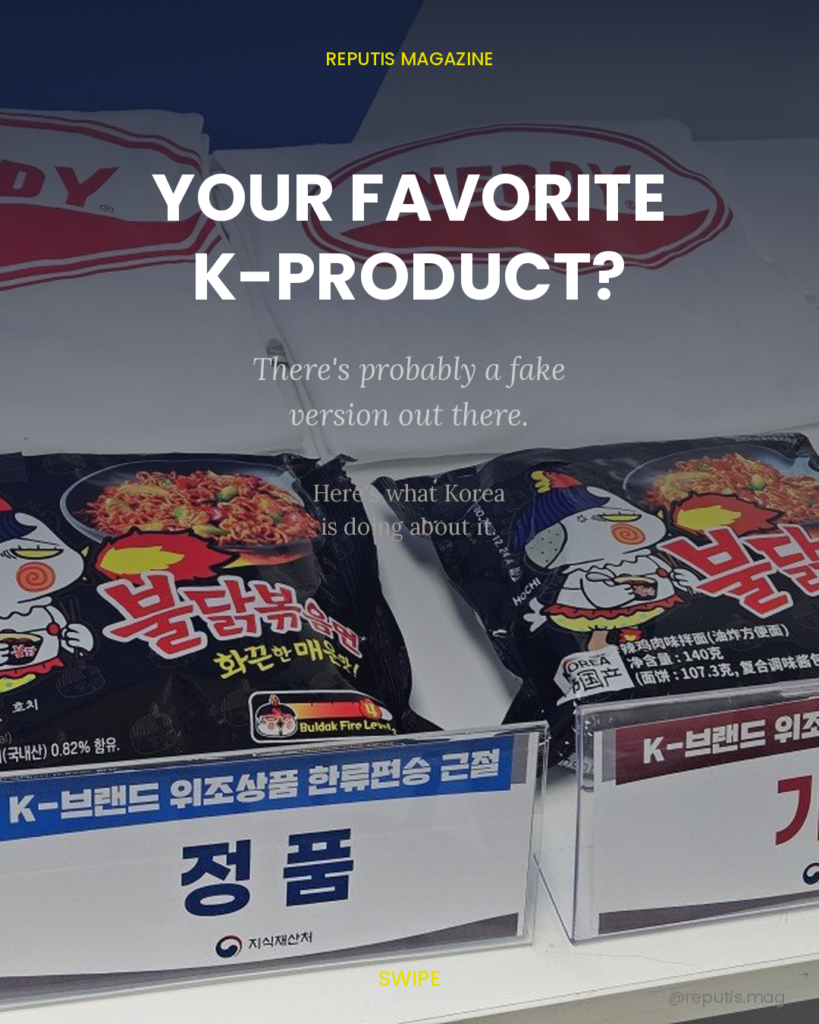
Your Favorite K-Product? There’s Probably a Fake Version Out There.
Counterfeit K-brand products are now an $8 billion problem. On March 31, 2026, Korea introduced a system that changes how the country responds — the government itself becomes the trademark holder.
The Scale of Counterfeit K-brand
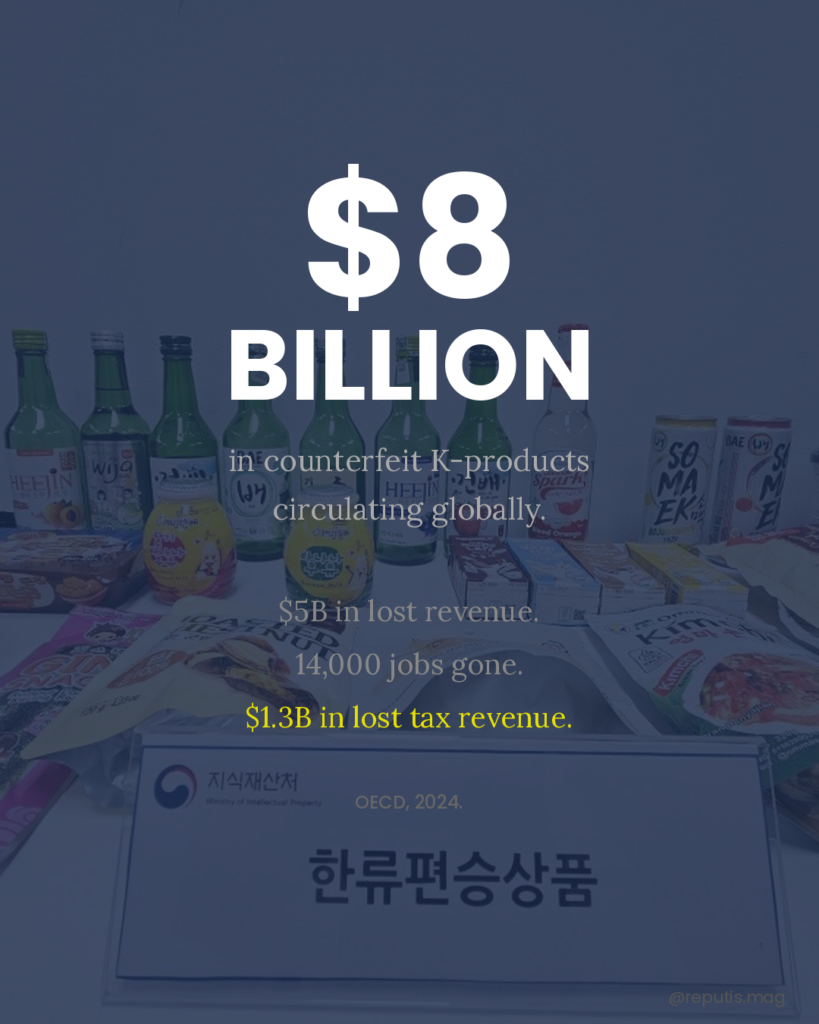
According to OECD data published in 2024, the global market for counterfeit K-brand products is approximately KRW 11 trillion — roughly $8 billion. The breakdown: about $5 billion in lost company revenue, 14,000 jobs lost, and $1.3 billion in lost government tax revenue.
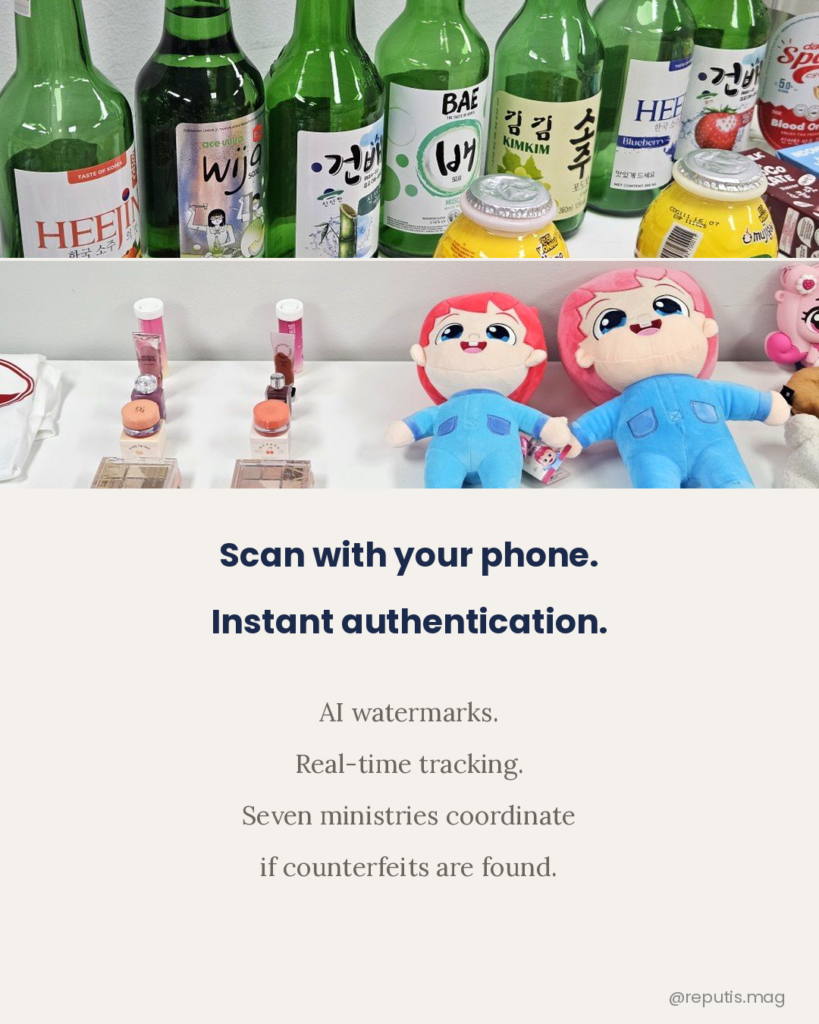
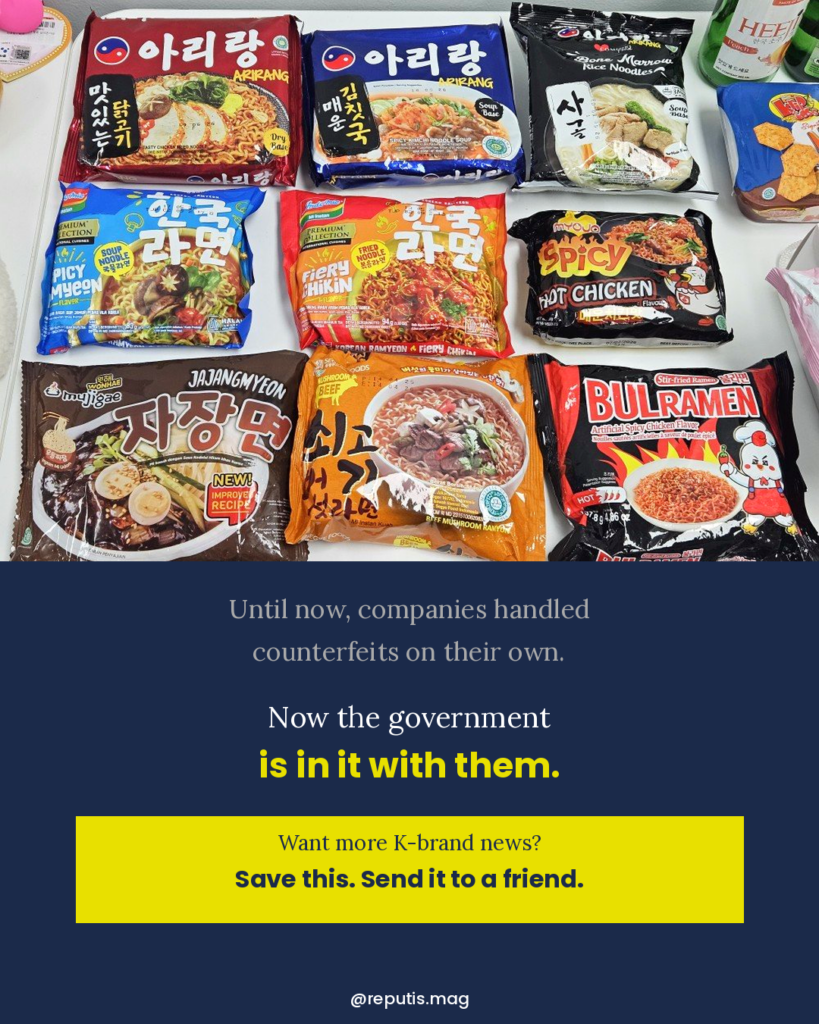
The counterfeits span categories. Korean-style ramen packages with similar but not identical branding. Soju bottles with made-up names in Korean script. Cosmetics and skincare with copied packaging. Fashion items from brands like NERDY reproduced and sold through cross-border e-commerce platforms. Character merchandise and toys with near-identical designs.
For most Korean companies — especially small and mid-sized exporters — fighting counterfeits abroad has been expensive and largely ineffective. Lawsuits in foreign jurisdictions cost more than the damages awarded. Local authorities in some markets are slow to act. Many companies simply give up.
What Changed regarding Counterfeit K-brand
On March 31, 2026, Korea’s Ministry of Intellectual Property announced the K-Brand Government Certification System at a cabinet meeting. The system launches in the second half of 2026.
The core change: the Korean government will register its own certification trademark in 70 countries where K-brand products are exported or where counterfeiting risk is high. Korean companies can voluntarily apply the certification mark to their products. When infringement occurs, the government — as the trademark rights holder — can directly request enforcement from local authorities in those countries.
This is different from the previous approach, where the government’s role was limited to supporting individual companies. Under the new system, the government itself has legal standing to act.
How It Works
Certified K-brand products will carry authentication technology developed by the Korea Minting and Security Printing Corporation — the same organization that produces Korean currency. The technology combines AI-powered digital watermarks with currency-grade anti-counterfeiting methods.
For consumers, it works like this: scan any certified product with a smartphone camera, and the system confirms whether it’s genuine. On the government side, scan data feeds into a real-time monitoring system that tracks where counterfeits appear globally.
When counterfeits are detected, the response involves coordination across seven ministries: the Ministry of Foreign Affairs, Ministry of Justice, Ministry of Trade, Industry and Energy, Ministry of SMEs and Startups, Ministry of Agriculture, Food and Rural Affairs, Ministry of Food and Drug Safety, and Korea Customs Service. Depending on the situation, the government can request investigation, seizure at customs, or prosecution through local authorities.
The Budget
The total project budget is KRW 9.5 billion (approximately $6.8 million). This covers trademark registration domestically and internationally (KRW 2.8 billion), overseas counterfeit tracking infrastructure (KRW 3.8 billion), public awareness and promotion (KRW 2.5 billion), and operating costs for the dedicated agency (KRW 400 million).

The promotion budget has drawn some scrutiny — KRW 2.5 billion for awareness campaigns, including KRW 1 billion allocated to influencer partnerships, K-pop collaborations, and broadcast product placement — but the government’s position is that consumer awareness in export markets is essential for the certification system to function.
What It Means
Until now, companies handled counterfeits on their own. The new system doesn’t replace that — companies still need to protect their own trademarks. But it adds a layer that individual companies, especially smaller ones, couldn’t build themselves: a government-backed certification mark with legal standing in 70 countries, real-time tracking infrastructure, and coordinated diplomatic and legal response.
Whether it works depends on execution — how quickly the trademarks are registered, how reliable the authentication technology proves in practice, and how responsive foreign authorities are to enforcement requests from the Korean government. But the structural shift is clear: counterfeit K-brand products are now a matter the Korean government treats as its own problem, not just the companies’.
:: Recent Posts ::